

Parenting & Step-parenting When Addiction or Personality Patterns Affect the Family System

If you are parenting or step-parenting in a family where one adult’s behavior feels emotionally unpredictable, shaped by addiction, or consistently unstable, you probably live with a specific kind of tension.
On the outside, you are careful. Measured. Neutral. On the inside, you are constantly tracking emotional shifts, buffering conversations, and trying to give your child something solid to stand on.
You might not talk about this openly. Not because it is not real, but because you know how easily words can be misused in families like this.
So instead, you learn to regulate yourself first. You learn to respond without explaining too much. You learn to protect the child without putting them in the middle. This is not instinctive for most of us. It is a skill that can be learned and practiced intentionally.
This page is about how to do that intentionally, using science instead of accusation.
What children actually experience in these systems

Children do not experience addiction, emotional volatility, or personality patterns as adult concepts.
They experience them as uncertainty. Uncertainty about tone. Uncertainty about reactions. Uncertainty about whether today will be calm or chaotic.
Research from the Harvard Center on the Developing Child shows that when a child cannot reliably predict emotional responses or relational safety, their brain shifts into a stress-response state. In that state, access to reasoning, language, and emotional regulation decreases.
This is why children in these families often look fine one moment and completely undone the next.
Their nervous system is always scanning. They are not being dramatic. They are adapting.
Why this feels especially hard in stepfamilies
In stepfamilies, children are often regulating across two emotional climates, not one.
Family systems research published in the Journal of Family Psychology shows that when expectations, emotional tone, and relational roles differ significantly across households, children carry a higher emotional and cognitive load.

That load does not reset at the doorway.
It shows up as:
• heightened anxiety before transitions
• repeated questions that feel bigger than the moment
• sudden resistance to routines that used to work
And if you are the stepparent, you may feel like you are holding emotional weight without clear authority or acknowledgment.
That is not because you are failing. It is because the system is demanding regulation from you.
Addiction, emotional instability, and impact without blame

You do not need to name or diagnose another adult to speak honestly about impact.
The National Institute on Drug Abuse (NIDA) explains that children in environments affected by substance use are exposed to higher levels of inconsistency, disrupted routines, and emotional unpredictability, even when substance use is not constant or visible.
Trauma-informed research from SAMHSA shows that chronic emotional volatility and boundary confusion activate the same stress pathways in children, regardless of cause.
This matters because it shifts the focus. Not to why another adult behaves the way they do, but to how the child’s body and brain are responding.
When a child says they want to change homes
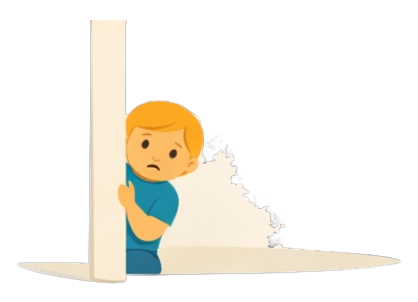
Few moments hit harder than hearing a child say: “I want to live here instead,” or “I don’t want to go back.”
In families like this, those words are rarely about logistics. They are about overwhelm. Children say this when their stress threshold has been exceeded and they do not yet have language for what they are carrying.
Responding too quickly or emotionally can put the child in the middle and create consequences you did not intend.
That is why we walk through this carefully in: When a Child Wants to Change Homes
The goal is to hear the feeling, offer steadiness, and avoid promises you cannot keep.
When conversations go sideways

Even with the best intentions, conversations in high-stress systems can escalate quickly. Voices rise. Someone shuts down. A child retreats or lashes out. You walk away wishing you could rewind.
What matters most is not saying everything perfectly the first time. It is repair.
Research consistently shows that children build trust not from calm families, but from families where rupture is followed by reliable reconnection.
If you need a grounded way to regroup after a conversation that went wrong, this pattern was built for that moment: After a Disastrous Family Conversation
Repair does not require overexplaining. It requires restoring safety.
The stepparent experience that rarely gets named
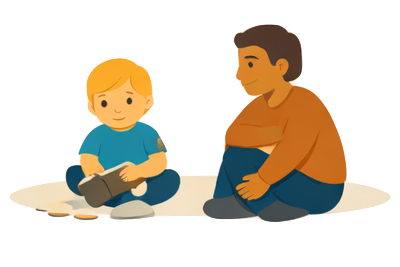
Stepparents are often expected to absorb emotional intensity quietly. You may care deeply while also feeling peripheral. You may be expected to be flexible while having little room to decide.
Research shows stepparents experience higher role ambiguity and emotional strain in high-conflict systems, particularly when another adult’s behavior is unpredictable.
This is why holding onto your own internal narrative matters. When everything around you feels unstable, you need something solid to return to.
That is why we created: Holding Onto Your Story in the Middle of Chaos
You are allowed to know who you are, even when the system feels loud.
Legal and ethical boundaries matter

Nothing on this page encourages diagnosis, accusation, or speculation. In high-conflict or legally visible situations, language matters.
We recommend:
• describing observable behavior
• staying child-focused
• documenting patterns without commentary
• avoiding labels
If your communication could ever be reviewed by professionals, these principles help protect you and your child: Principles for Court-Visible Communication
Being careful is not silence. It is strategy.
What actually helps children long-term
The CDC’s Adverse Childhood Experiences research shows that even one stable, responsive adult dramatically reduces long-term harm for children growing up in high-stress environments.
You cannot control another adult.

But you can:
• be predictable
• stay emotionally grounded
• repair when things go wrong
• keep children out of adult weight
That is not small. That is protective.
Related resources

• When a Child Wants to Change Homes
• After a Disastrous Family Conversation
• Holding Onto Your Story in the Middle of Chaos
• Principles for Court-Visible Communication
When reading is not enough: scripts and tools for real moments. If you are here, there is a good chance you already understand the theory.
You know predictability matters. You know repair matters more than perfection. You know your child is reacting to stress, not trying to cause problems.
What usually breaks down is not understanding. If you need a place to begin when everything feels urgent, start here. It is having words when the moment hits. That is why the next layer of this work is not more education.
It is language and structure you can rely on under pressure.