

Why Explaining Yourself Rarely Works With Kids
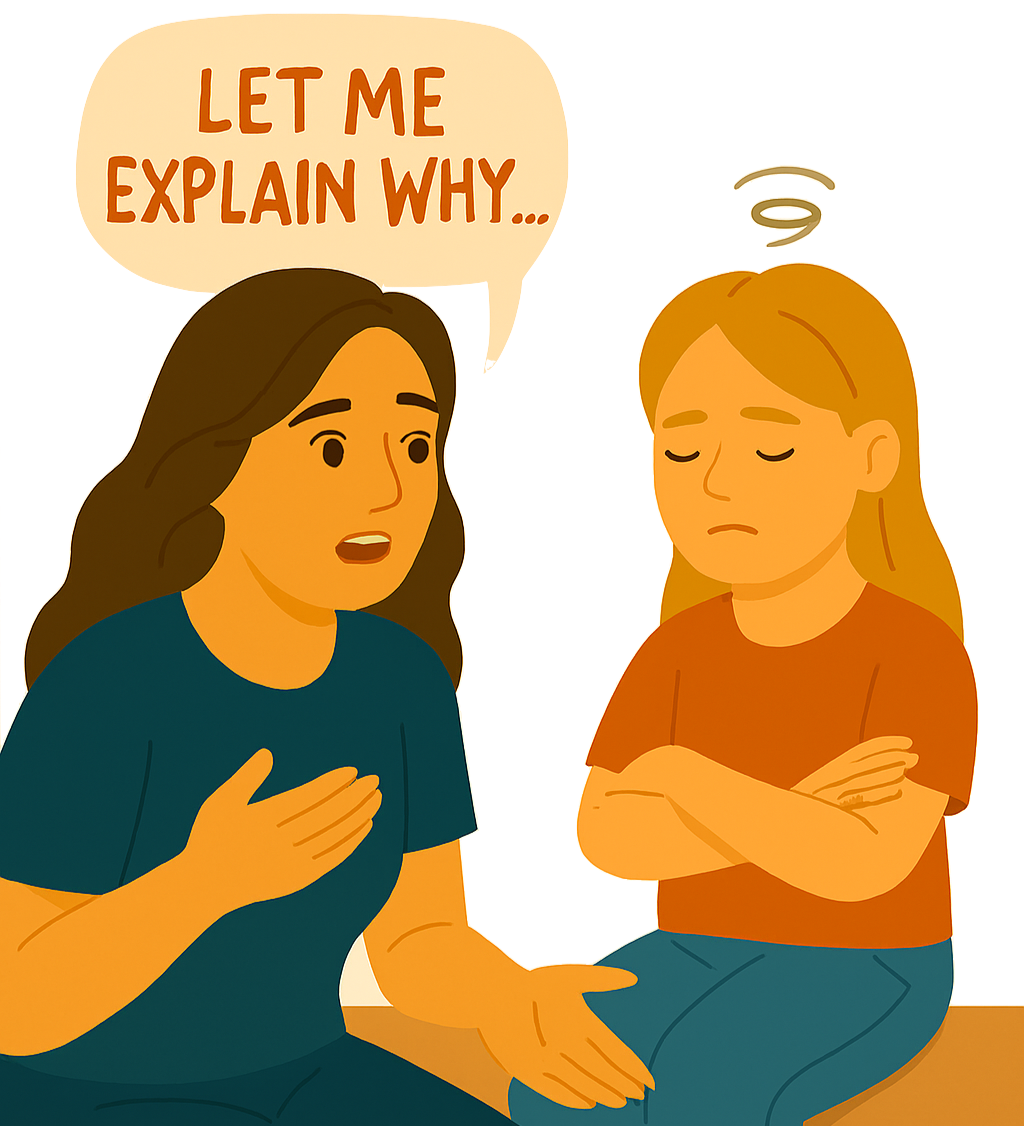
You usually think of the right words later.
In the shower. In the car.
After everyone is already upset.
In the moment, you explain. You clarify. You try to be fair, responsible, and reasonable.
And somehow, it makes everything worse.
Most adults believe explaining is the right thing to do. In emotionally charged moments, it often has the opposite effect.
If this feels familiar, you are not failing at communication. You are using the wrong tool at the wrong time.
The Problem Adults Are Actually Trying to Solve
When a child resists, shuts down, or pushes back, most adults are trying to answer one question: “Why are they not understanding me?”
So we explain. We add context. We justify decisions. We restate intent.
From the adult side, this feels calm and logical.
From the child’s side, it often feels overwhelming, confusing, or threatening.
The real problem is not behavior. It is emotional overload.
What Is Happening Beneath the Surface
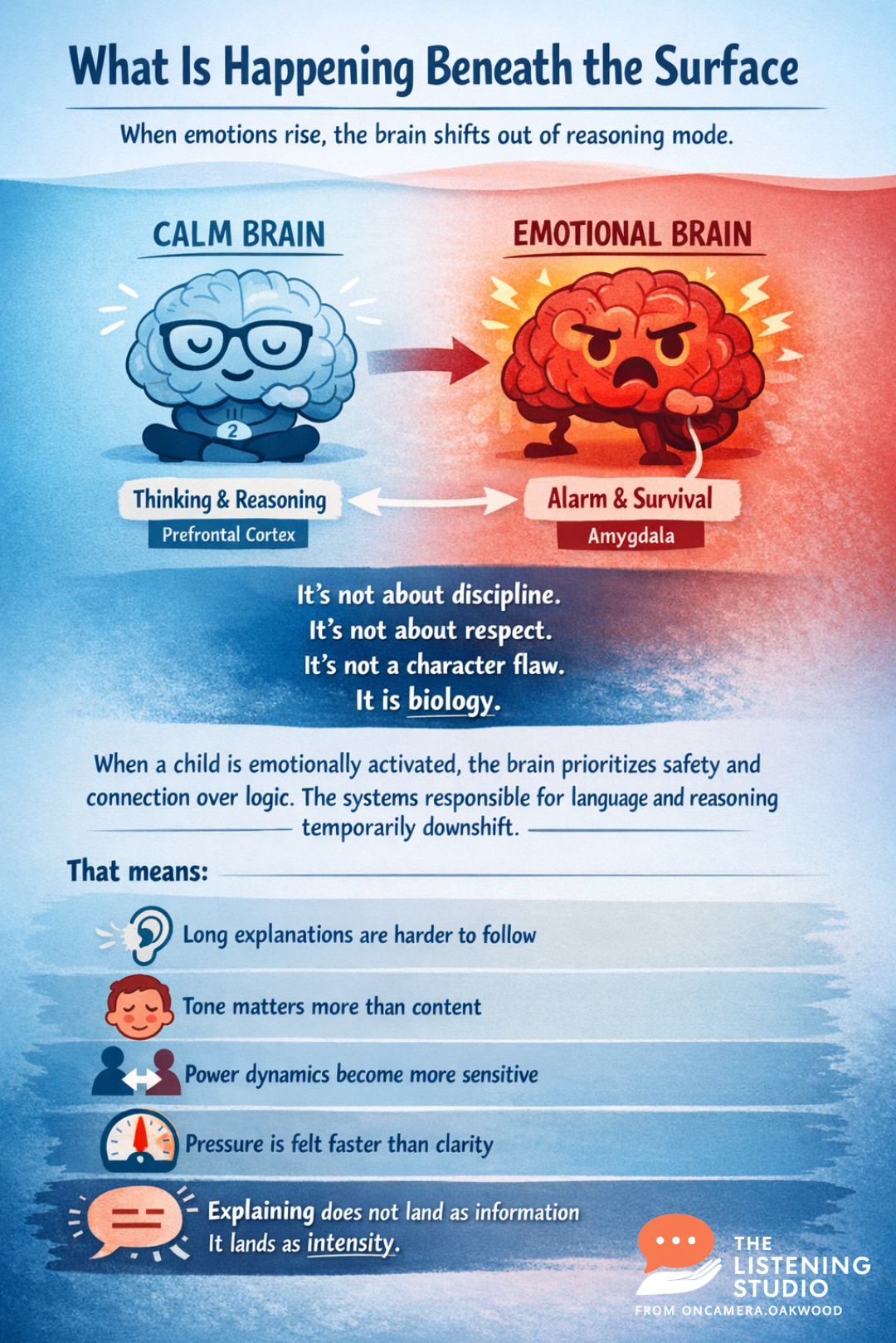
When emotions rise, the brain shifts out of reasoning mode.
This is not a discipline issue. It is not a respect issue. It is not a character flaw. It is biology.
When a child is emotionally activated, the brain prioritizes safety and connection over logic. The systems responsible for language processing and reasoning temporarily downshift.
That means:
Long explanations are harder to follow
Tone matters more than content
Power dynamics become more sensitive
Pressure is felt faster than clarity
Explaining does not land as information. It lands as intensity.
Why Explaining Feels Necessary to Adults
Adults explain because they are regulating themselves.
Explaining reassures us that:
We are being fair
We are being misunderstood
We are doing the right thing
In high-conflict family systems, especially those involving hostile co-parenting dynamics, explaining often becomes a survival instinct rather than a communication strategy.
When words are routinely questioned or reframed elsewhere, silence can feel risky. Overexplaining starts to feel protective.
From both lived experience and study, this instinct is understandable.
It is also one of the fastest ways to escalate a moment.
What Kids Hear Instead
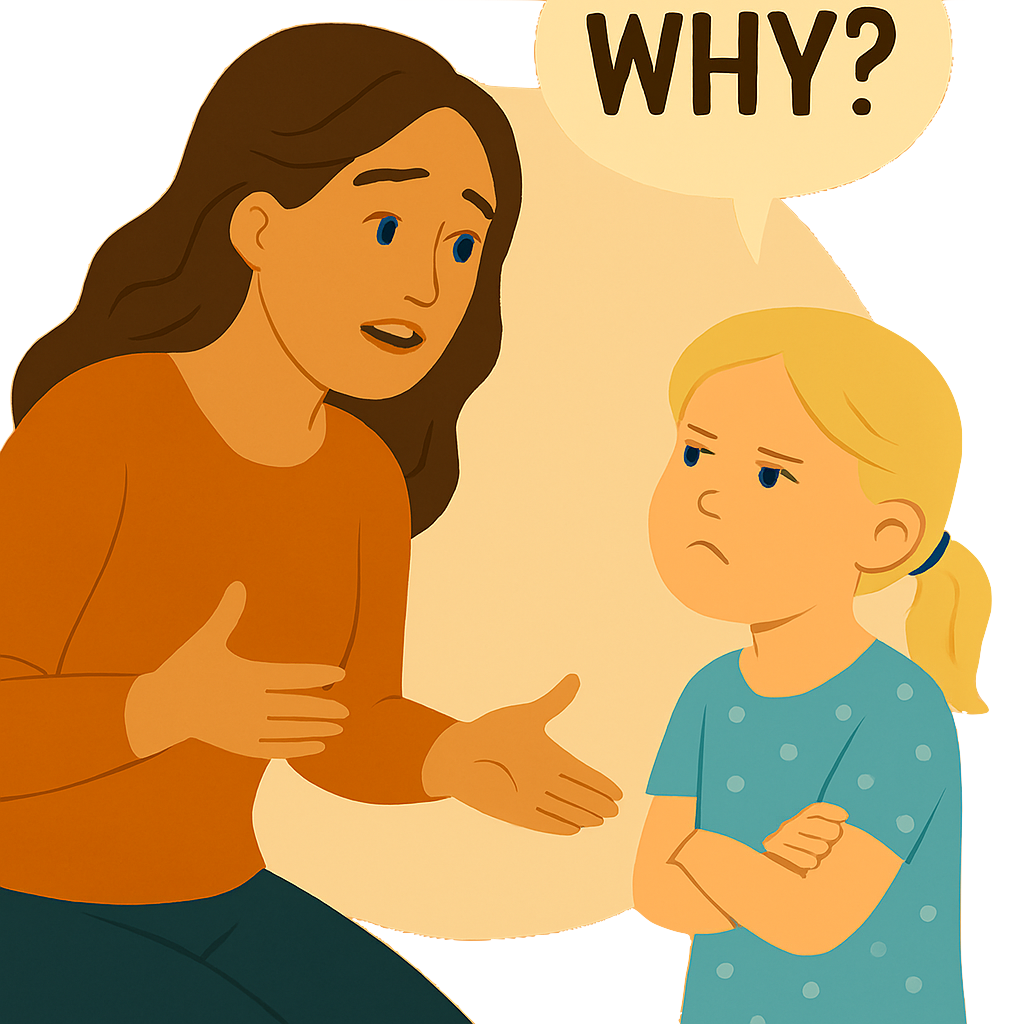
When adults explain during emotionally charged moments, kids often hear:
You need to agree with me
Your feelings are inconvenient
I am in control and you are not
Calm down so I feel better
Even when none of that is true. This is not about blame. It is about translation.
The Shift That Changes Everything
The solution is not better explanations. The solution is less language at the right time.
Short, grounded language does three things:
Signals safety
Reduces pressure
Preserves authority without force
Instead of explaining, effective communication often looks like:
Naming what you see
Stating the boundary
Pausing
Clarity does not require justification.
Why Regulation Comes Before Reasoning
The Listening Studio is built around one core principle: regulation comes before reasoning.
Once a child’s nervous system settles, understanding follows naturally. Conversations can happen later, when brains are ready for them.
The goal is not obedience. The goal is a moment that settles instead of spirals.
If This Moment Happens Often
If you regularly find yourself explaining, backtracking, or feeling like you need to prove your intentions, you are not alone.
You are likely navigating emotionally charged moments without a framework that supports regulation first.
That is exactly what the Listening Studio exists for. Not to give you more words. To help you use fewer, better ones.